Dr. Abhishek Jain Homeopathy logo Dr Abhishek JainHOMEOPATHY · LUCKNOW Book Now
Aliganj, Lucknow · BHMS · 15+ years

Homeopathy Doctor for Hair Loss in Lucknow – Dr. Abhishek Jain

Looking for a homeopathy doctor for hair loss in Lucknow? Dr. Abhishek Jain (BHMS), with over 15 years of experience, consults patients with hair fall, thinning, patchy hair loss, dandruff-related shedding and postpartum or thyroid-linked hair loss at his clinic in Aliganj, and online for patients across India and abroad. Every plan starts with finding out why your hair is falling. Treatment is individualised, and response varies from person to person.

Is Your Hair Fall Normal? Understanding the Hair Growth Cycle

Everyone sheds hair every day. Losing roughly 50 to 100 hairs a day is generally considered normal, and some people lose a little more on wash days. Each hair follows a cycle, and hair fall becomes a concern when more hairs than usual enter the resting phase at the same time, or when new hairs grow back thinner or stop growing.

1. Anagen: growthLasts years (about 2 to 8). Most of your hair is in this phase.
2. Catagen: transitionA few weeks (about 2 to 6).
3. Telogen: rest and shedA few months (about 2 to 4), then the hair falls and a new one begins.

Durations are approximate and not to scale. They vary from person to person.

Your hair fall may be more than normal if you notice a widening parting, a thinner ponytail, a changing hairline, bald patches, scalp itching or soreness, or many hairs coming out with a gentle tug. If this continues for more than a few weeks, it is worth getting your scalp examined.

Types of Hair Loss We See at Our Lucknow Clinic

“Hair fall” is not one condition. Each type has a different cause and a different outlook, which is why the pattern of your hair loss matters more than the amount.

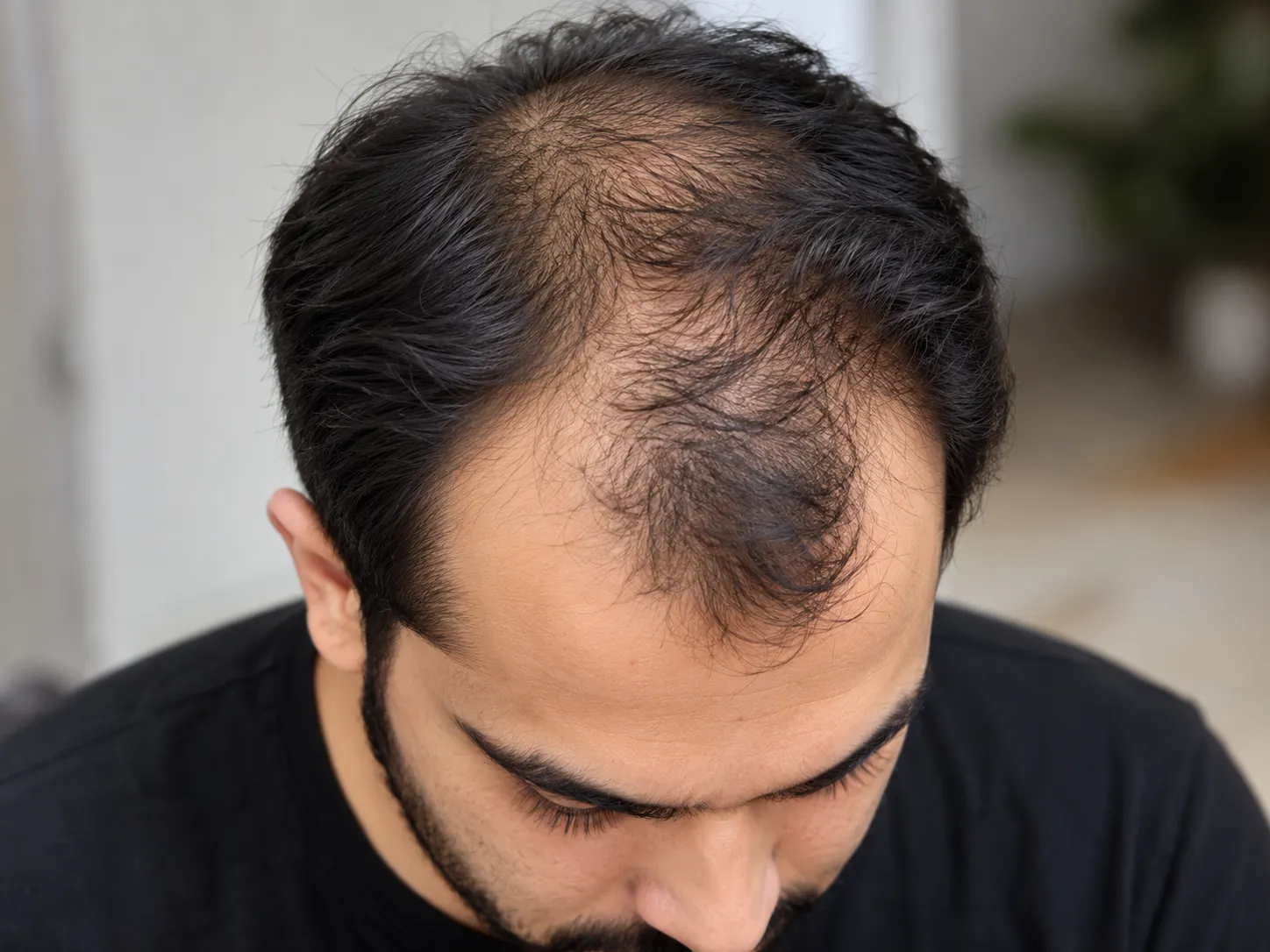
Male pattern hair loss with a receding hairline at the temples and a thinning crown

Male Pattern Hair Loss (Androgenetic Alopecia)

Gradual thinning at the temples, which can form an "M" shaped hairline, and at the crown. It runs in families and is driven by hormones: the follicles slowly shrink and grow finer, shorter hairs. It usually starts after puberty and progresses slowly.

When to get it checkedSee a doctor early if thinning starts in your teens or twenties, is moving quickly, or comes with an itchy or painful scalp.

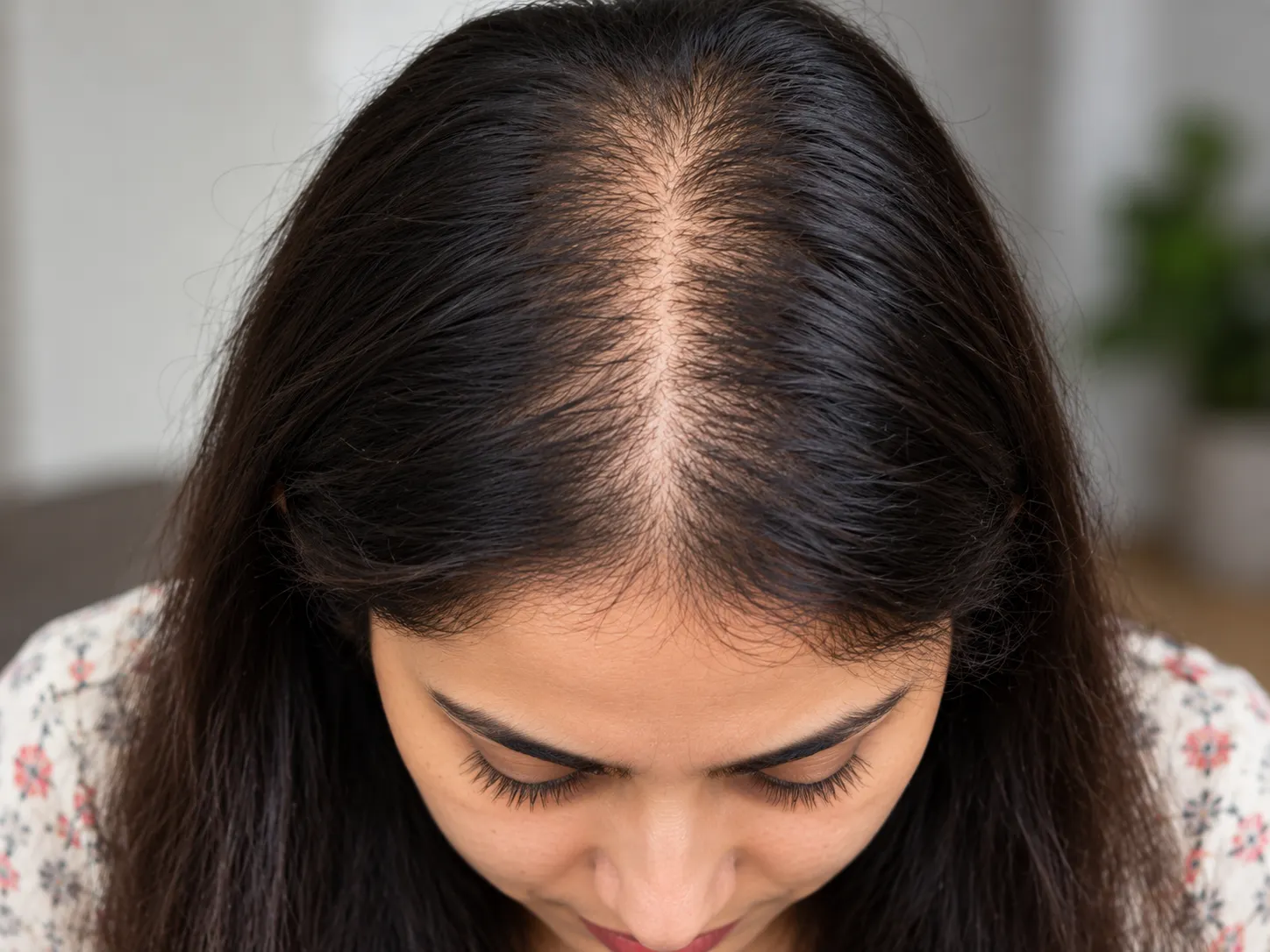
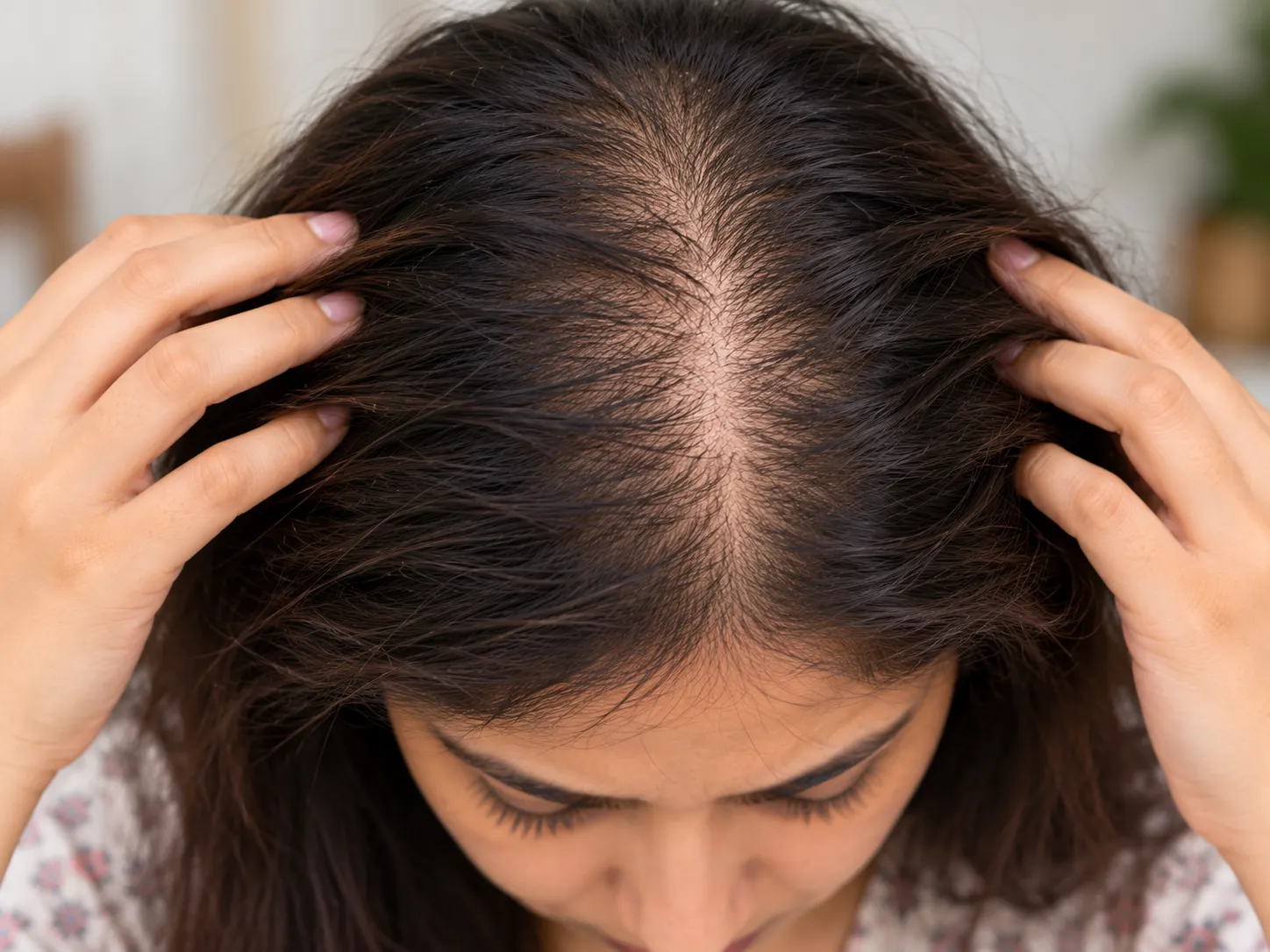
Woman with a widening centre parting showing female pattern hair thinning

Female Pattern Hair Thinning

A widening parting and a thinner ponytail, usually with the frontal hairline kept. Genetics play a role, and hormonal changes such as PCOD or menopause can add to it. Thyroid and iron levels are worth checking.

When to get it checkedSee a doctor if thinning is steady for more than a few months or comes with irregular periods, acne or excess facial hair.

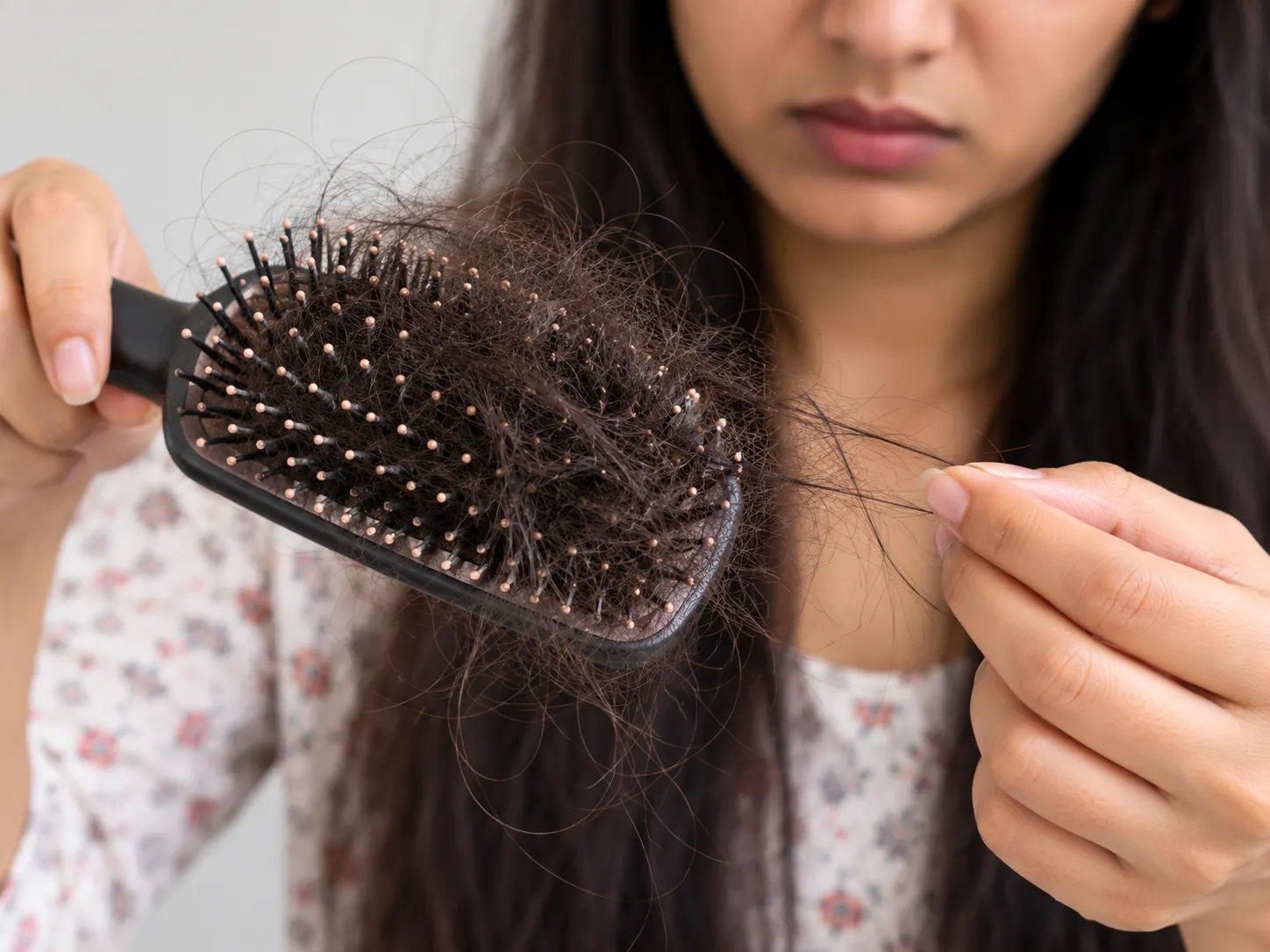
Handful of shed hair on a comb from sudden diffuse hair fall

Sudden Diffuse Shedding (Telogen Effluvium)

Hair comes out in handfuls while combing or washing, from all over the scalp, usually two to three months after a trigger such as high fever, surgery, childbirth, a crash diet, severe stress or certain medicines. It is often temporary.

When to get it checkedSee a doctor if shedding lasts longer than about six months, or comes with fatigue, weight change or other symptoms.

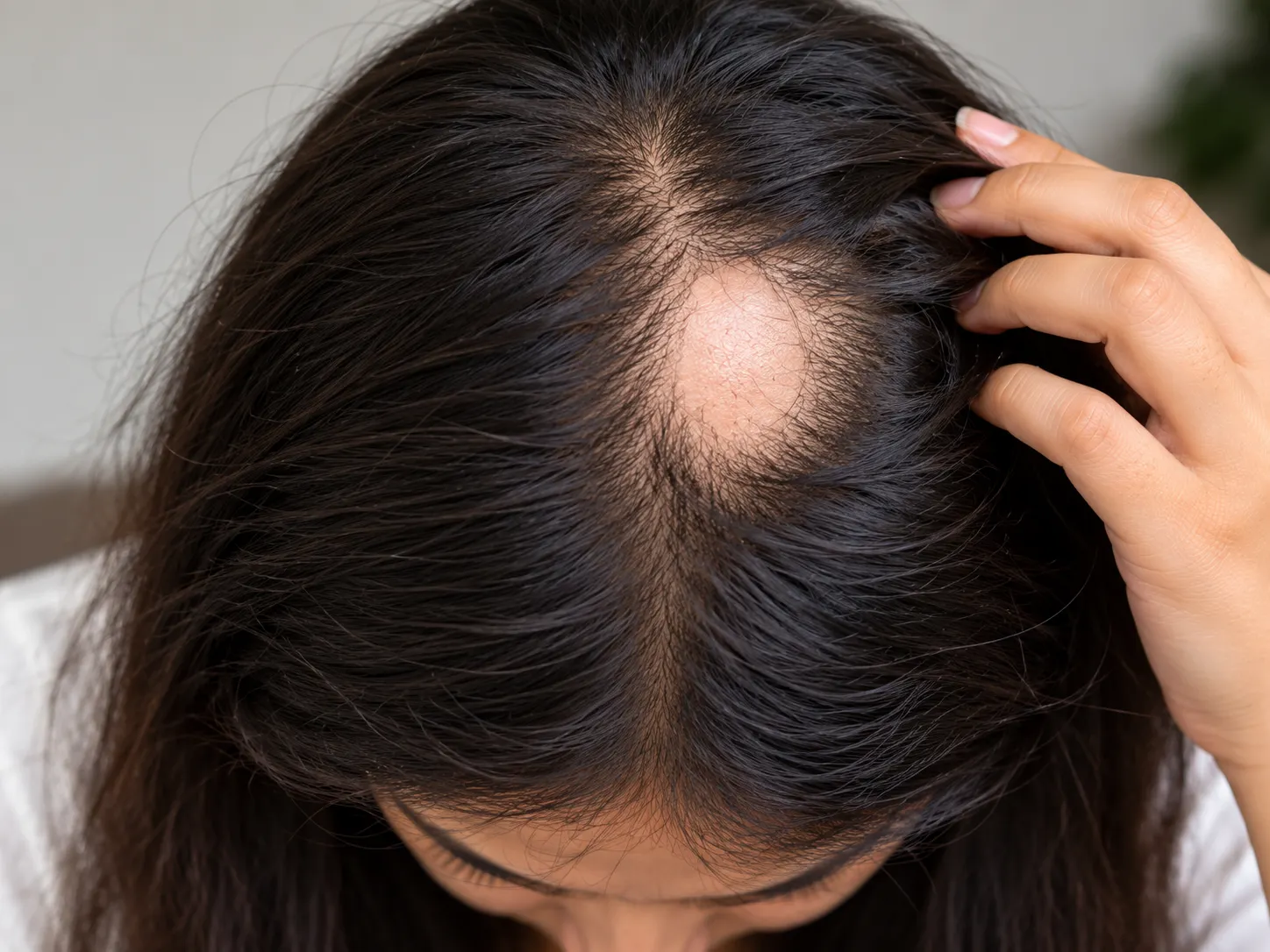
Round smooth bald patch on the scalp from alopecia areata

Patchy Hair Loss (Alopecia Areata)

Smooth, round, coin-sized bald patches that can appear suddenly on the scalp or beard. It is an autoimmune condition and is sometimes linked to thyroid problems. Hair may regrow, but patches can return.

When to get it checkedSee a doctor promptly for any new patch, especially if more patches appear quickly or eyebrows and eyelashes are affected.

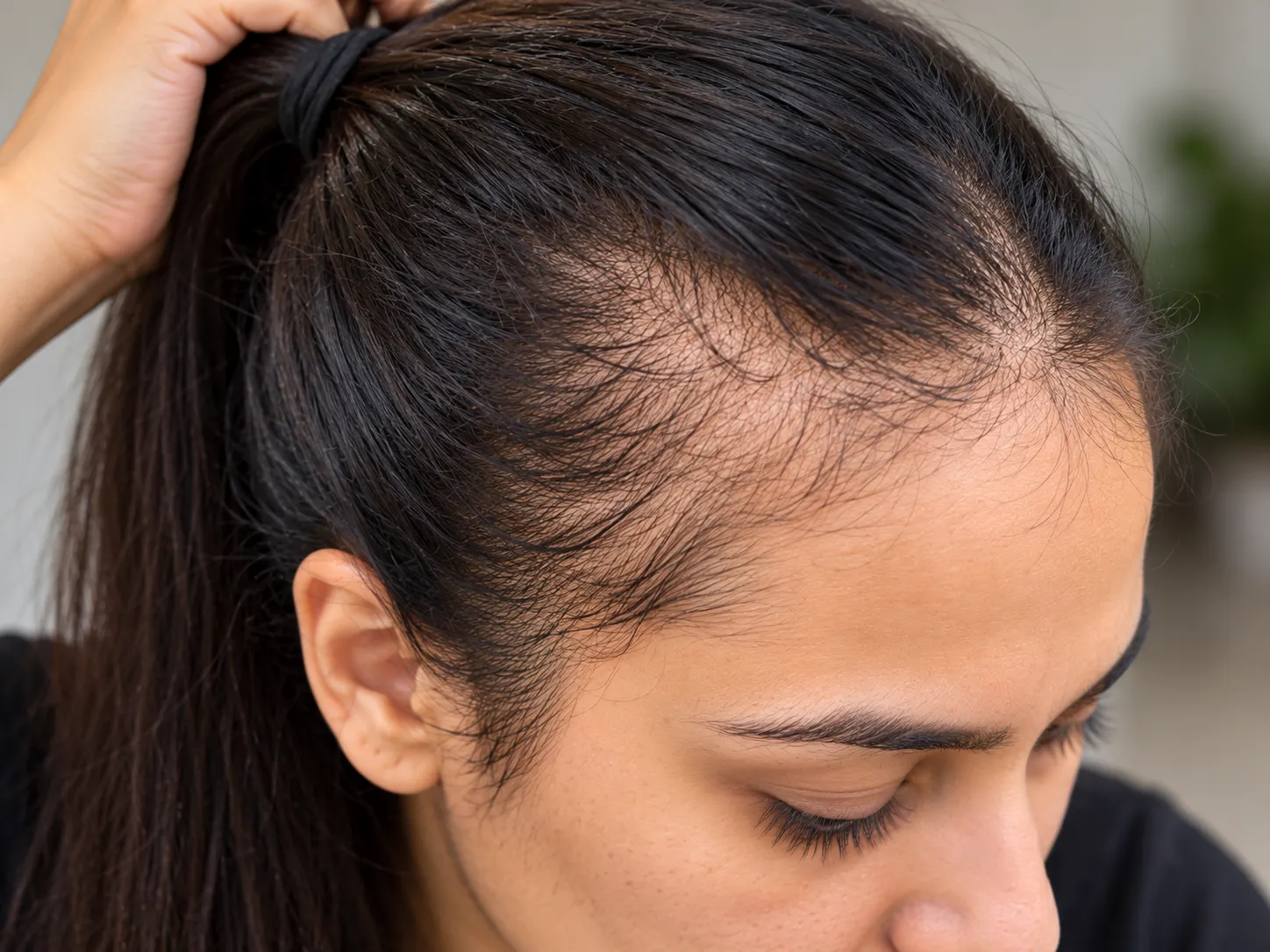
Hair thinning along the hairline from traction alopecia caused by tight hairstyles

Traction Alopecia (Tight Hairstyles)

Thinning along the hairline and temples from constant pulling by tight ponytails, braids, buns, extensions or headgear. It is reversible if you change the styling early, but long-term pulling can damage follicles permanently.

When to get it checkedSee a doctor if you notice small bumps, pain or redness along the hairline, or if the hairline keeps receding.

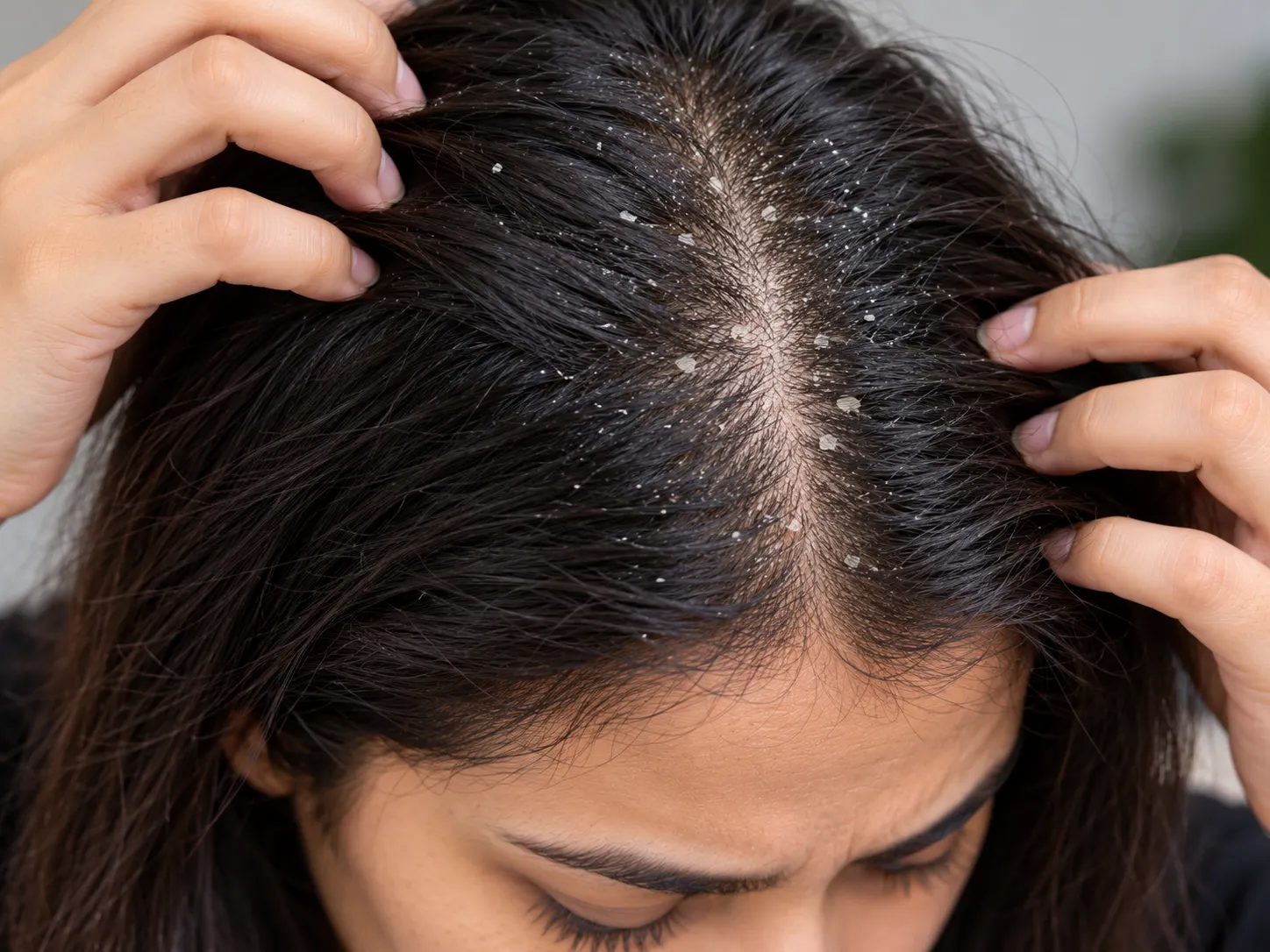
Flaky itchy scalp with dandruff linked to hair fall

Dandruff and Scalp-Related Hair Fall

A flaky, itchy or oily scalp (seborrheic dermatitis, sometimes a fungal infection) can make hair weaker and increase shedding. Scratching and harsh products make it worse. See our page on homeopathic skin treatment for related scalp conditions.

When to get it checkedSee a doctor if the scalp is red, oozing or painful, or if there are round scaly patches with broken hair, which may be a fungal infection needing medical treatment.

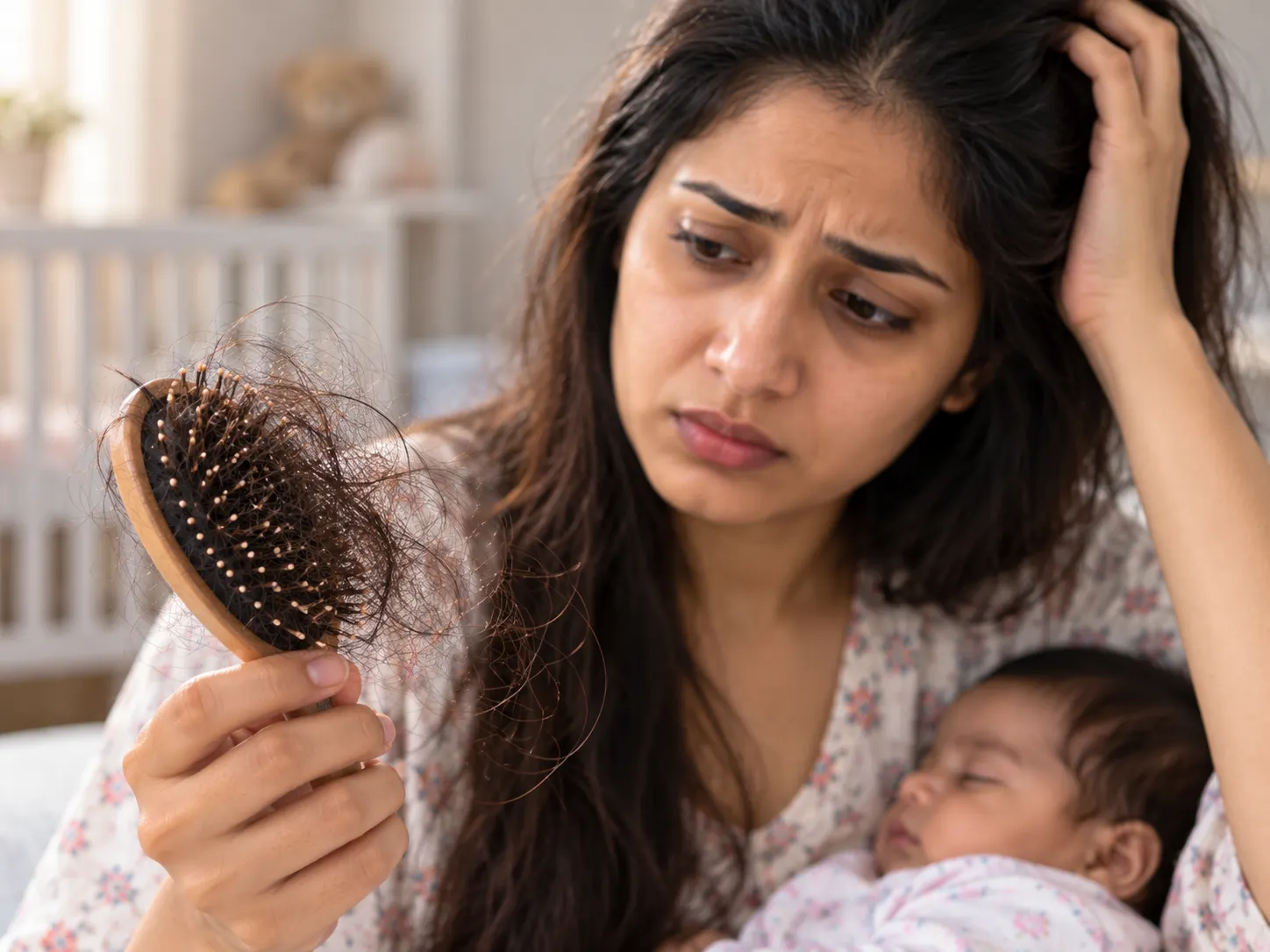
New mother with increased hair shedding after childbirth

Postpartum Hair Fall

Many women shed a lot of hair two to four months after delivery. During pregnancy, hormones keep more hairs in the growth phase, and after birth many enter the resting phase together. Most women see recovery over the following months.

When to get it checkedSee a doctor if shedding is severe, lasts beyond a year, or comes with fatigue, mood changes or other thyroid symptoms.

Diffuse hair thinning linked to thyroid and hormonal imbalance

Thyroid and Hormonal Hair Loss

Underactive or overactive thyroid, PCOD and other hormonal changes can cause diffuse thinning, often with dry, brittle hair. Look for fatigue, weight change, feeling unusually cold or hot, or irregular periods.

When to get it checkedA simple TSH blood test can check the thyroid. Please get tests done if you have these symptoms.

Less common types that need early medical attention

  • Scarring (cicatricial) alopecia: inflammation destroys follicles, so loss can be permanent. A red, painful, burning or scaly scalp should be examined early.
  • Anagen effluvium: rapid loss during chemotherapy or radiation.
  • Trichotillomania: hair loss from the urge to pull hair, which benefits from counselling and support.
  • Tinea capitis: a fungal infection of the scalp, mostly in children, needing medical treatment.

Causes of Hair Fall

More than one cause often works together. Finding the main trigger is the first step of any treatment plan.

Genes and hormones

Pattern hair loss runs in families and depends on hormone sensitivity of the follicles. Thyroid disorders, PCOD, menopause and pregnancy can all change hair growth.

Nutrition

Hair needs protein, iron, zinc and vitamins to grow. Low iron, low protein intake, low vitamin D or B12, and crash dieting are common contributors to shedding.

Stress, sleep and illness

High fever, infections, surgery, long-term stress and poor sleep can push many hairs into the resting phase together, so shedding shows up weeks to months later.

Medicines and treatments

Chemotherapy, some blood thinners, certain antidepressants, retinoids and other medicines can increase shedding. Never stop a prescribed medicine without asking your doctor.

Scalp conditions

Dandruff, seborrheic dermatitis, fungal infections and scalp psoriasis can inflame the scalp and weaken hair. Scarring conditions need early specialist care.

Hair-care habits

Tight hairstyles, daily heat styling, frequent bleaching or straightening and rough towel-drying cause breakage. Hard water, dust and pollution can leave hair dry and brittle, which adds to breakage.

Two causes deserve a special mention. Thyroid problems commonly cause diffuse hair thinning, so read our guide on hypothyroidism and homeopathy. In women, hormonal conditions such as PCOD can also affect hair and skin; see our guide on PCOS and PCOD.

How Hair Fall Is Assessed

A proper assessment avoids guesswork. At the clinic, the consultation looks at:

  • When the hair fall began, how fast it is progressing and what happened in the months before
  • The pattern on your scalp: widening parting, receding temples, patches or all-over thinning
  • Scalp symptoms such as itching, flaking, oiliness, pain or redness
  • Diet, sleep, stress, digestion, menstrual cycle, pregnancy history and past illness
  • Medicines you take and hair-care habits
  • Family history of hair loss or thyroid problems

Tests That May Help

Depending on your history, the doctor may suggest tests to rule out a treatable cause. Commonly these include:

  • Thyroid test (TSH)
  • Blood count and ferritin (iron stores)
  • Vitamin D and vitamin B12 levels
  • Hormone tests in women with irregular periods, acne or excess hair growth
  • A scalp scraping or referral for a dermatologist's opinion when a fungal infection or scarring condition is suspected

Tests are suggested only when your history calls for them. Please bring any recent reports.

Homeopathy for Hair Fall: Why Patients Choose It

Homeopathy is a complementary system of medicine recognised in India under the Ministry of AYUSH. Patients with hair fall often choose it because:

  • It is individualised. Two people with the same hair loss may receive different prescriptions, based on their whole health picture.
  • It looks at the whole person. Stress, sleep, digestion, hormones and family history are part of the consultation, not just the scalp.
  • It is non-invasive. Medicines are taken by mouth, with no injections or procedures.
  • It can be used alongside other care. You can continue medicines or supplements your doctor has prescribed, and Dr. Jain will plan around them.
  • It suits many ages. Homeopathic medicines are generally mild, and care is adjusted for adults, women after childbirth and children.

Homeopathy is not a replacement for needed tests or urgent medical care. Response varies from person to person, and no honest doctor can promise regrowth.

How We Work

  1. Detailed case taking. Dr. Jain records your hair history, scalp symptoms, lifestyle, medical and family history.
  2. Individual prescription. Medicines are chosen only after the consultation. Please do not self-medicate from internet lists.
  3. Diet and hair-care guidance. You receive simple advice on nutrition, sleep, stress and gentle hair care.
  4. Regular follow-ups. Hair changes slowly, so follow-ups, in the clinic or on WhatsApp, are used to review progress and adjust the plan.
  5. Tests and referral when needed. If a thyroid, iron or scalp condition needs separate treatment, you will be advised accordingly.

Patients from Lucknow, Across India and Abroad

For over 15 years, Dr. Abhishek Jain has seen patients for hair fall and other long-standing conditions. Many visit the clinic in Aliganj, and others consult online from different cities, states and countries.

In Lucknow

Visit the clinic on Kapoorthala Road, Aliganj. It is easy to reach from Mahanagar, Nirala Nagar, Indira Nagar, Gomti Nagar, Jankipuram and other parts of the city.

Across India

Consult on Google Meet or WhatsApp from anywhere in India. After the consultation, medicines can be sent by courier.

Outside India

Patients living abroad can also consult online. Please ask the clinic about the options for medicines in your country.

Dr. Abhishek Jain BHMS, homeopathy doctor for hair loss in Lucknow

Meet Dr. Abhishek Jain

BHMS15+ years of experienceAliganj, Lucknow

Dr. Abhishek Jain holds a Bachelor of Homeopathic Medicine and Surgery (BHMS) degree and has more than 15 years of clinical experience. Alongside hair loss, he consults for skin problems, thyroid disorders, PCOD, allergies and children's health concerns.

Read more about Dr. Jain and the clinic, or see his approach to skin and scalp conditions.

What to Expect at Your First Visit

  1. Book your slot. Call, WhatsApp or use the booking form on the homepage.
  2. Registration. The consultation fee is ₹500 and is valid for 15 days.
  3. Detailed discussion. You describe your hair fall, scalp symptoms and health history.
  4. Scalp and hair check. The doctor examines your parting, hairline and scalp.
  5. Plan and advice. You receive your medicines, diet and hair-care guidance and a follow-up plan.

Please bring: recent blood reports (thyroid, haemoglobin, ferritin, vitamin D and B12, if done), a list of medicines and supplements, the shampoos and oils you use, and phone photos of your hair from a year or two ago to show the change.

Everyday Hair-Care Habits

  • Handle wet hair gently, and detangle with a wide-tooth comb
  • Wash as often as your scalp needs with a mild shampoo
  • Eat regular meals with enough protein, and include iron-rich foods
  • Sleep well and make time for stress relief such as a walk or yoga
  • Get sunlight exposure, and check vitamin D if it may be low
  • Tight ponytails, braids and buns every day
  • Daily heat styling, frequent bleaching or chemical straightening
  • Crash diets and skipping meals
  • Random supplements without a test, since too much of some can itself cause hair loss
  • Scratching or scrubbing a flaky scalp hard

Oiling and scalp massage are fine if you enjoy them, but they do not treat the cause of hair fall.

When to see a doctor without delay

  • Sudden hair loss in patches, or large amounts of hair coming out within days
  • A red, painful, burning, scaly or oozing scalp, or round scaly patches with broken hair
  • Hair loss together with extreme tiredness, unexplained weight change, feeling very hot or cold, or irregular periods
  • Hair loss that started after a new medicine (do not stop it yourself; ask your doctor)
  • Hair loss in a child

What Our Patients Say

Real experiences from patients of Dr. Abhishek Jain’s clinic.

Clinic Location and Contact in Aliganj, Lucknow

Dr. Abhishek Jain Homeopathic Clinic

9, Kapoorthala Road, Opposite Pragati Kendra,
Ram Sanehi Ghat, Aliganj, Lucknow,
Uttar Pradesh 226024

Clinic timings

Monday – Saturday11 AM – 2 PM
5:30 PM – 8:30 PM
Sunday11 AM – 2 PM

Consultation fee: ₹500 (valid for 15 days). Online consultations available.

Why Patients Choose Our Clinic

  • Over 15 years of clinical experience with Dr. Abhishek Jain (BHMS)
  • Detailed case taking before any prescription
  • Hair fall, thyroid, PCOD and scalp problems consulted under one roof
  • In-person and online consultations, with courier delivery of medicines across India
  • Follow-up support on WhatsApp
  • Easy to find on Kapoorthala Road, Aliganj, opposite Pragati Kendra
  • A clear consultation fee of ₹500, valid for 15 days

Hair Fall Treatment: Frequently Asked Questions

How do I stop my hair falling?

Start by finding out why it is falling, because the right step depends on the cause. Common triggers are low iron or vitamin levels, thyroid problems, hormonal changes (PCOD, childbirth, menopause), stress, illness, scalp conditions such as dandruff, and tight or heat-heavy hairstyling. Eat enough protein, handle wet hair gently, avoid tight hairstyles, sleep well and manage stress. If shedding has lasted more than two to three months, get basic blood tests done and have your scalp examined. Pattern hair loss from genes is gradual and usually needs long-term care rather than a quick fix. See a doctor sooner if you notice bald patches, a painful or scaly scalp or sudden heavy shedding.

Can a lost hair grow back?

It depends on the type of hair loss. In shedding caused by a temporary trigger such as illness, childbirth, a crash diet or a stressful period, the follicles are usually still alive, and hair often grows back over several months once the cause is addressed. Patchy loss (alopecia areata) can regrow, sometimes without treatment, but it can come back. In pattern hair loss the follicles shrink gradually, so early care matters for keeping the hair you have. In scarring alopecias the follicles are destroyed and the loss can be permanent, which is why a red, painful, scaly or burning scalp should be examined early. Hair grows roughly 1 cm a month, so changes take months to see.

What is the best treatment for falling hair?

There is no single best treatment, because hair fall covers several different conditions. The best results come from treating the cause: correcting a nutrient deficiency, managing thyroid or hormonal problems, treating a scalp infection or changing hair habits. For pattern hair loss, dermatology options such as minoxidil (and finasteride for men) are commonly used under a doctor's guidance. Homeopathic care is a complementary option. Dr. Jain takes a detailed history covering hair pattern, scalp, stress, sleep, digestion, hormones and family history, and prescribes individually. Response varies, so a proper assessment comes first.

What is the best shampoo for hair loss?

No shampoo can stop hair loss on its own, because shampoo works on the scalp surface and does not change the underlying cause. Choose a mild shampoo that suits your scalp type, wash as often as your scalp needs, and apply conditioner to the lengths rather than the scalp. Washing does not cause hair loss; it only removes hairs that had already shed. If you have dandruff or an itchy, flaky scalp, a medicated anti-dandruff shampoo recommended by your doctor may help the scalp condition, which can reduce shedding linked to it. Avoid very hot water and harsh scrubbing, and check with your doctor before using medicated shampoos for long periods.

How to stop hair fall immediately?

No method stops hair fall overnight. Hairs that shed today are often linked to something that happened weeks or months earlier. What you can do right away is reduce further damage: handle hair gently, avoid tight hairstyles, heat and chemical treatments, do not brush wet hair roughly, eat proper meals with enough protein, sleep well and avoid crash diets or unsupervised supplements. Then book an assessment to find the cause. Seek prompt medical advice if you notice sudden patchy loss, a painful scalp, or hair fall together with fatigue, weight change, irregular periods or other symptoms.

Which food stops hair fall?

No food stops hair fall by itself, but hair needs steady nutrition, and low protein, iron, zinc or vitamin levels can add to shedding. A balanced Indian plate can include protein (dal, chana, rajma, paneer, curd, eggs, fish, chicken, sprouts), iron-rich foods (green leafy vegetables, beetroot, dates, jaggery, pumpkin and sesame seeds) eaten with vitamin C foods such as amla, lemon or guava for better absorption, and nuts, seeds and whole grains for zinc and healthy fats. Sunlight, dairy and eggs support vitamin D and B12; vegetarians may need a B12 test. Supplements are most useful when a test shows a deficiency, and too much of some (vitamin A, selenium, iron, zinc) can itself cause problems, so take them only on medical advice.

How to regrow hair?

Regrowth depends on the type of hair loss and how early it is assessed. The steps that matter are: find and treat the cause, protect the scalp and hair from damage, improve nutrition, sleep and stress, and be patient. Hair grows roughly 1 cm a month, and it often takes three to six months to see a visible change. Conventional options for some types include minoxidil and procedures such as PRP, offered by dermatologists. Homeopathic treatment is used as a complementary approach, with individual prescriptions after consultation. No honest doctor can guarantee regrowth, and results vary from person to person.

Can homeopathy help with hair loss?

Many patients choose homeopathy for hair fall because it is a non-invasive, individualised approach that looks at the whole person and not only the scalp. At Dr. Jain's clinic the consultation covers when the hair fall began, its pattern, scalp symptoms, stress, sleep, digestion, menstrual and thyroid history, diet and family history. Medicines are then selected for you and reviewed at follow-ups. Homeopathy is a complementary system and response varies from person to person. It should not replace urgent medical care or tests, and if your hair fall is linked to thyroid disease, anaemia or another condition, we encourage getting that checked and treated too.

How many hairs fall per day is normal?

Losing about 50 to 100 hairs a day is generally considered normal, and some sources allow up to about 150, especially on wash days. Each hair goes through a growth phase that lasts years, a short transition phase of a few weeks and a resting phase of a few months before it sheds and is replaced. Shedding may be more than normal if you notice a widening parting, a thinner ponytail, bald patches, a changing hairline or many hairs coming out with a gentle tug. If this lasts more than a few weeks, get it checked.

Does thyroid cause hair fall?

Yes. Both an underactive thyroid (hypothyroidism) and an overactive thyroid (hyperthyroidism) can cause diffuse thinning, often with dry, brittle hair. Other signs include fatigue, weight change, feeling unusually cold or hot, constipation and irregular periods. A simple TSH blood test can check this. If thyroid disease is confirmed, treating it is essential, and hair usually needs time to recover afterwards.

Is hair fall after delivery normal?

Yes, shedding a few months after childbirth is very common. During pregnancy, hormone levels keep more hairs in the growth phase. After delivery many of them move into the resting phase together and shed, usually peaking around three to four months after birth. For most women hair density gradually recovers over the following months. Good nutrition, rest and the vitamins your doctor advises can help. See a doctor if the shedding is severe, continues beyond about a year, or comes with fatigue, mood changes or other thyroid symptoms, because postpartum thyroid problems can also cause hair loss.

Which is the best homeopathy doctor for hair loss in Lucknow?

“Best” depends on what matters to you, so we would rather let you decide. Dr. Abhishek Jain (BHMS) has over 15 years of experience and consults for hair fall and other long-standing conditions at his clinic on Kapoorthala Road, Aliganj, Lucknow. You can read patient reviews on our Google Business Profile and then book a consultation to see whether the approach suits you. Call +91 891 783 3155 or message us on WhatsApp at +91 993 522 4400.

I live outside Lucknow. Can I get hair fall treatment online?

Yes. Online consultations are available on Google Meet and WhatsApp for patients in other cities and states, and patients living abroad can also consult online. Please share clear daylight photos of your scalp and parting, and any recent blood reports. Medicines can be sent by courier across India after the consultation. For other countries, please ask the clinic about the options available.

बाल झड़ने का होम्योपैथिक इलाज कैसे किया जाता है?

होम्योपैथी में हर मरीज़ का इलाज उसके लक्षणों, बाल झड़ने के पैटर्न, तनाव, नींद, पाचन, हार्मोन (थायराइड, PCOD) और पारिवारिक इतिहास को समझकर व्यक्तिगत रूप से तय किया जाता है। डॉ. अभिषेक जैन के क्लिनिक में परामर्श के दौरान पूरी हिस्ट्री ली जाती है और फॉलो-अप में प्रगति देखी जाती है। असर हर व्यक्ति में अलग हो सकता है, इसलिए दवा खुद से न लें। अगर बाल अचानक गुच्छों में झड़ें, गंजे धब्बे बनें, या थकान और वज़न में बदलाव जैसे लक्षण हों, तो जल्द डॉक्टर से जाँच कराएँ। यह जानकारी केवल सामान्य जानकारी के लिए है, डॉक्टर के परामर्श का विकल्प नहीं।

लखनऊ में हेयर फॉल डॉक्टर कौन हैं?

“बेस्ट” हर मरीज़ की ज़रूरत पर निर्भर करता है। डॉ. अभिषेक जैन (BHMS) को 15 वर्षों से अधिक का अनुभव है और उनका क्लिनिक कपूरथला रोड, अलीगंज, लखनऊ में है, जहाँ बाल झड़ने, डैंड्रफ़ और स्कैल्प से जुड़ी समस्याओं के लिए परामर्श उपलब्ध है। आप Google पर मरीज़ों के रिव्यू देखकर निर्णय ले सकते हैं। अपॉइंटमेंट के लिए +91 891 783 3155 पर कॉल करें या +91 993 522 4400 पर WhatsApp करें।

Book a Hair Fall Consultation with Dr. Abhishek Jain

Tell us about your hair concern and we will help you pick a convenient slot, at the clinic in Aliganj or online.

Disclaimer: This page is for general information only and is not a substitute for a medical consultation, diagnosis or treatment. Homeopathy is a complementary system of medicine, and individual response varies. Do not stop or change any prescribed medicine without consulting your doctor. Medically reviewed by Dr. Abhishek Jain (BHMS). Last updated: 22 October 2026.